
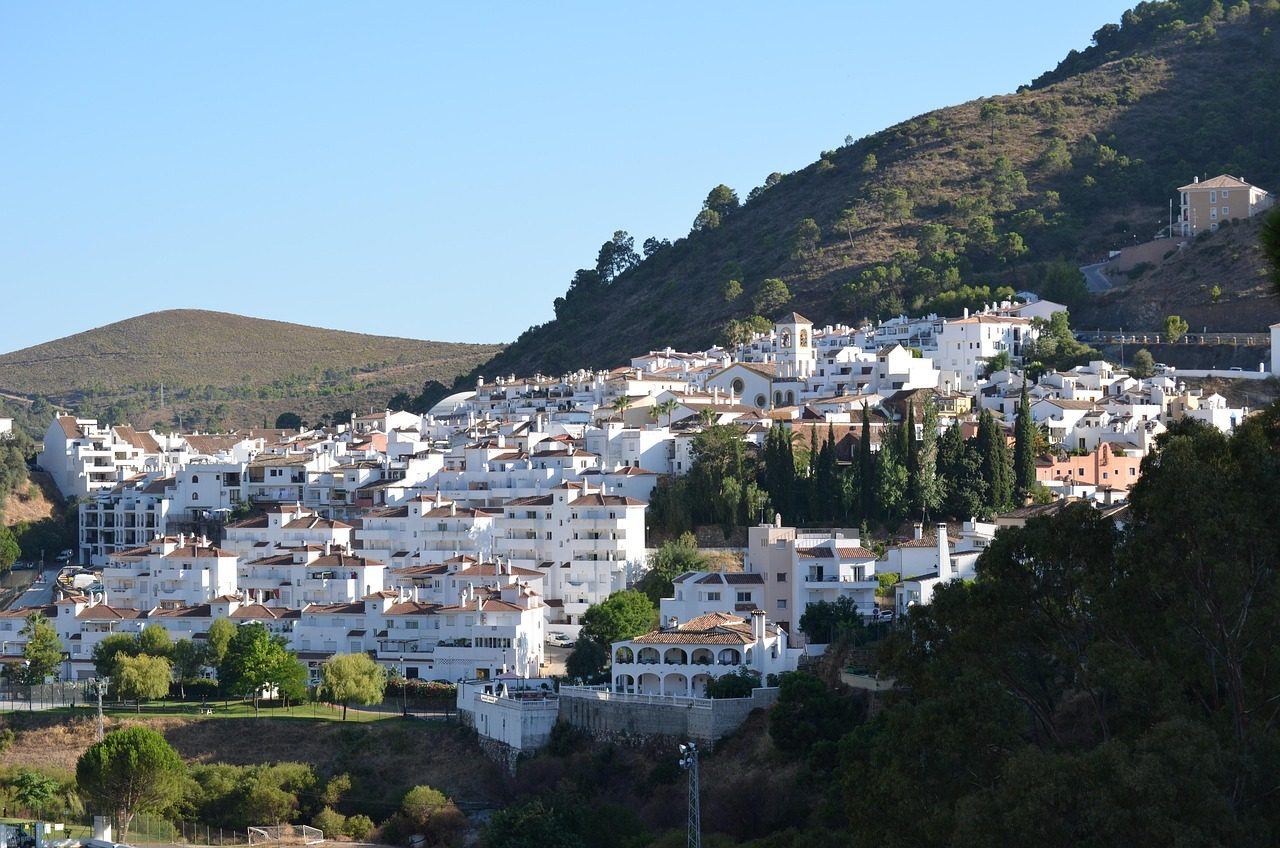
Almost everything written about renting in Alhaurín el Grande is about the countryside — the rural fincas, the water rights, the golf-shoulder demand out among the hills. That is fair enough, because the rural product is a large part of the town's market. But it has left a different and quieter opportunity under-discussed: the old-town townhouse, the casco histórico property that sits in the heart of the pueblo blanco rather than out in the valley. It is a genuinely different short-let product, with its own guest, its own economics and its own operational logic, and owners who run a townhouse as if it were a scaled-down finca, or who overlook the type entirely, miss what it can do.
The casco townhouse is the most authentically Andalucían thing the town has to rent — a house in a living white village, woven into the everyday life of the place rather than set apart from it — and authenticity is precisely what a growing slice of the inland market is looking for.
A house in a living village
The casco histórico of Alhaurín el Grande is the old core: narrow streets, white houses, the town's plazas and churches, the daily rhythm of a working Andalucían town that happens to be beautiful. A townhouse here puts the guest inside that, within a short walk of the market, the squares around Plaza Alta and Plaza Baja, the Iglesia de la Encarnación and the cafés and shops of village life. The appeal is immersion: waking up in a real village, buying bread where the locals buy it, watching the town go about its day from a roof terrace.
For an owner, this reframes the whole offer. The townhouse is not selling space and a private pool the way a finca does; it is selling place and authenticity. The pitch is the village experience — the walkability, the character of an old house, the position in the middle of the town's life, the roof terraces and patios that are the casco's particular charm. A property marketed on that speaks directly to the guest who wants the real pueblo rather than a rural retreat or a coastal resort, and that guest is a distinct and reachable market. Matching the property to that guest is the foundation of how we approach management here.
The guest who wants the real town
The casco townhouse guest is a particular traveller, and knowing them is what makes the type work. They tend to value authenticity over amenities, character over convenience, and the experience of a genuine Andalucían village over a sanitised resort version. Many are cultural travellers, slow-tourism visitors, or Northern Europeans — the town's established British and Belgian community is a standing source of demand — who want to live in the village rather than look at it from a distance. Some are people testing the area before deciding whether to buy here, using a townhouse stay as a way to try village life on for size.
What they want from the property follows from that. They want the character kept — the old features, the terraces, the sense of a real house — alongside the comfort that makes a stay easy. They want the walkable village at the door. They are generally happy to trade the private pool and the sweeping grounds of a finca for being in the middle of everything, because being in the middle of everything is the whole reason they chose the casco. A townhouse set up to deliver that — characterful, comfortable, genuinely part of the village — earns its guest's loyalty in a way a generic let never does.
Different economics from the finca
The casco townhouse and the rural finca are different businesses, and an owner should not expect one to behave like the other. The townhouse typically suits shorter, more flexible stays than the long rural bookings — the cultural break, the village week, the try-before-you-buy stay — though it also takes the longer cultural sojourn well. Its operational profile is gentler in some ways than a finca's: there is no pool plant to maintain, no well or septic system, no long private access track, because the property is plumbed into the town like any village house. That removes a whole category of rural headache.
In exchange, it brings the realities of old-town living: village access and parking rather than a private drive, an older building that needs sympathetic upkeep, neighbours close by in a tight historic street. None of this is a drawback so much as the nature of the product, but it does shape how the property should be run and what the guest should be told to expect. An honest income view for a casco townhouse looks different from a finca's — built on a steadier flow of shorter cultural and village stays rather than long rural lets — and reading one against the other is how owners misjudge a perfectly good property.
Pricing the character premium
Pricing an old-town townhouse is its own task, because the comparable stock is thin and the value is in things a bare spec sheet does not capture — the character, the position, the terraces, the village experience. The temptation is to price it like an ordinary apartment and undersell the authenticity, or to overreach against coastal rates the inland market will not pay. The right approach reads the casco product on its own terms and prices the character premium that the authenticity-seeking guest will genuinely pay, while keeping occupancy steady across the year. The town's fiesta calendar matters here too — the Día del Tomate week and the wider feria season pull real demand into the village, and a townhouse in the heart of it should be priced to make the most of those peaks rather than letting them pass at a flat rate.
Get the foundations right first
Whatever the product, the licensing and compliance basics have to be sound before a townhouse takes its first booking. An old-town property is no exception to the rules, and the habitability and registration questions deserve settling at the outset rather than discovering halfway through a season. The good news is that a casco townhouse usually avoids the more tangled rural questions — the DAFO and water-rights issues that attach to fincas out in the valley — which can make it a more straightforward property to get cleanly lettable. Establishing the legal footing early is what lets an owner build on the casco's appeal with confidence.
The try-before-you-buy guest is worth courting
One segment deserves singling out, because the casco townhouse serves it better than almost any other product in the town: the visitor who is quietly considering whether to move to the area. Alhaurín el Grande has a long-established Northern European community, and a steady trickle of people arrive each year to test the idea of living here before committing to a purchase. A townhouse in the heart of the village is the ideal place for them to do it, because it lets them experience the real daily life of the town — the market, the squares, the walk to the bakery, the rhythm of a working pueblo — rather than the insulated version a rural villa or a coastal resort would give them.
For an owner, this guest is valuable in ways that go beyond the booking itself. They tend to stay longer, because they are sampling life rather than taking a short holiday, and they tend to be careful, engaged occupants who treat the property well because they are imagining themselves living there. Some of them become repeat guests as they make further trips to firm up a decision, and the relationship can run for months or seasons. The townhouse that becomes their base for that process earns a loyal, low-friction, longer-staying guest of exactly the kind inland letting most wants.
Positioning for this guest is mostly a matter of honesty and immersion: presenting the property as a genuine slice of village life rather than a polished holiday let, and making it easy for the guest to live as a temporary local. Done well, it turns the casco townhouse into something more than accommodation — it becomes the doorway through which people decide to make the town their home, which is a quietly powerful thing for a property to be and a durable source of the kind of bookings an inland owner can build a calendar on.
The pueblo product worth taking seriously
Alhaurín el Grande's rental story does not have to be only about the countryside. The casco histórico townhouse is a real and distinctive short-let product — the most authentic thing the town can offer a visitor — and it serves a guest who is actively looking for exactly that. For the owner who runs it as the pueblo-blanco product it is, rather than as a lesser finca or a generic apartment, it can be a steady and characterful performer that fills the village's own demand.
If you own a townhouse in the casco histórico of Alhaurín el Grande, or are considering one, and want a clear read on how to position and run it and what it can realistically earn, we know the town and its market. Get in touch through our owners' page and we will give you an honest, specific assessment.