
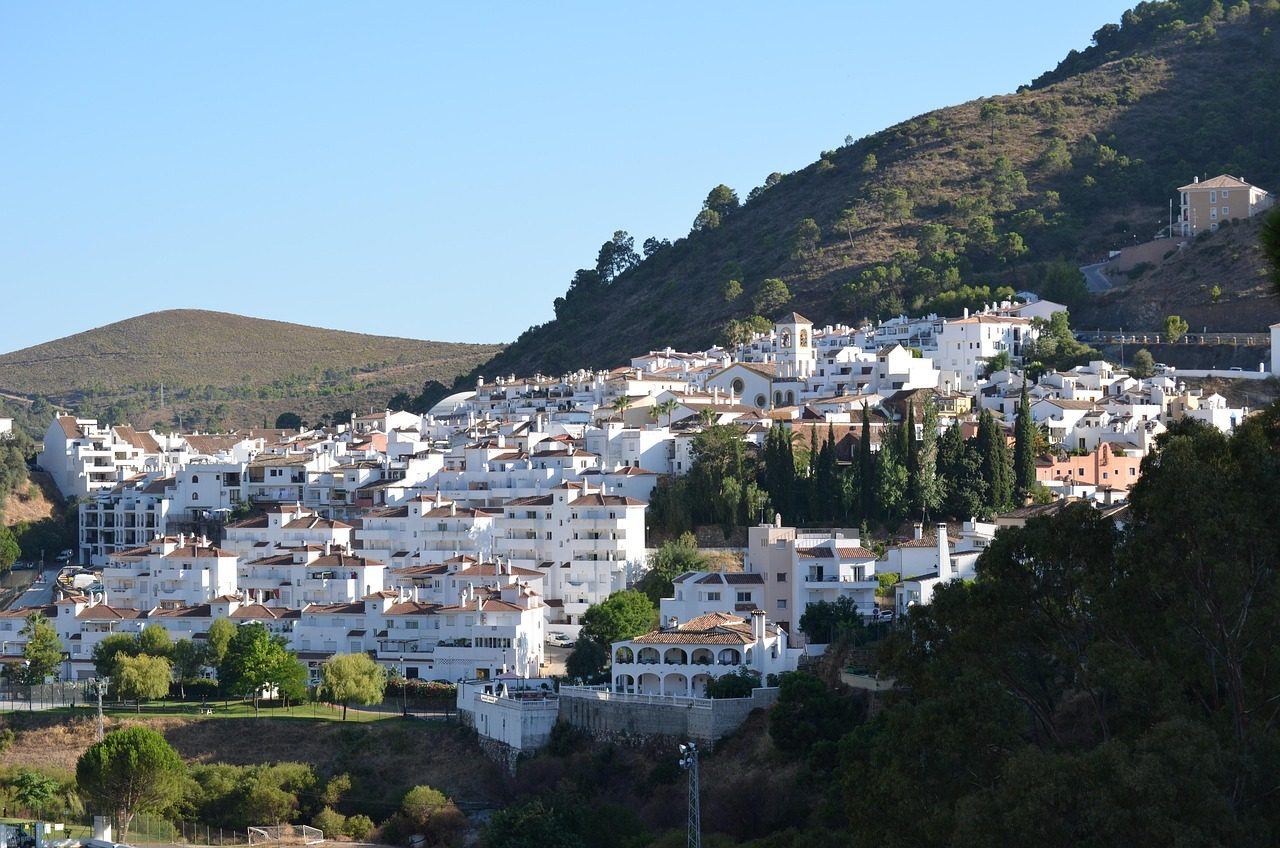
Most of the conversation about renting in Alhaurín el Grande is built around people who come from a long way off and stay for a long time. The snowbird who arrives in November and leaves in March. The relocating family taking a six-month let while they decide whether to buy. The over-wintering golfer settling in for the shoulder season. These are real markets, and they matter to an owner's calendar, but they are not the only ones, and treating them as if they were leaves a quieter and very local market under-served. That market is the short rural break — the Málaga-city family or couple who drive up from the coast for two or three nights, not two or three months, because they want a weekend in a white village rather than a season in one.
It is worth naming this market on its own terms, because it behaves differently from everything else on the calendar and rewards a different way of pricing. A property run only for the long-stay guest, with weekly rates and month-long minimums, is closed to the weekend escaper by design. A property set up to take the short break as well opens a second source of demand that lands on exactly the dates the long-stay markets tend to leave empty.
Half an hour from the city, a world away from it
The whole proposition rests on geography. Alhaurín el Grande sits in the Guadalhorce valley, close enough to Málaga city that the drive is a matter of half an hour rather than a real journey, and far enough into the countryside that arriving feels like leaving the city behind entirely. For a family in a flat in the centre of Málaga, that combination is unusually valuable. They can finish the working week, load the car, and be in a pueblo blanco before dinner, without the planning or the cost that a flight or a long drive to somewhere properly remote would demand.
What they find when they arrive is the thing the city cannot give them. The casco histórico with its narrow streets and white houses, the squares around the Plaza Alta and Plaza Baja, the Iglesia de la Encarnación, the surrounding countryside opening out into the valley. It is the contrast that sells the break — the quiet, the space, the sense of being in a real Andalucían town rather than a resort — and it is a contrast that only works because it is so close. Distance is the enemy of the weekend trip; a guest will not spend half of a two-night stay travelling. Alhaurín el Grande's proximity to the city is precisely what makes it a credible weekend escape rather than an aspiration that never gets booked, and that is the first thing an owner here should understand about how the property earns.
A market that lands on the weekend
The defining feature of this demand is when it falls. The weekend escaper is, by definition, a Friday-to-Sunday traveller. They are working or at school during the week and free at the weekend, so their stays cluster on the same two or three nights and leave the midweek largely untouched. This is the opposite shape to the long-stay markets, which fill blocks of weeks without regard to which day of the week they begin, and the difference is the whole opportunity.
An owner whose calendar is built around long lets sees the weeks book solid in the snowbird season and the relocation windows, but sees gaps in the in-between periods — the spring and autumn weeks that are too short for a season and too long to leave a property idle. The weekend market fills exactly those gaps, and it fills them on the weekends, which is when it is most willing to pay. A property positioned to take a two-night Friday booking in a quiet April week earns on dates that a long-stay-only strategy would simply leave dark. Reading the calendar this way — knowing which weeks suit the season and which suit the short break — is at the centre of how we approach the letting strategy here.
It also changes the rhythm of the operation. Weekend turnovers are more frequent than seasonal ones, which means more changeovers, more cleans, more check-ins, more of the work that an owner running a single long let never has to think about. That is manageable, but it has to be planned for rather than discovered halfway through a busy autumn, and it is one of the practical reasons the weekend market is best run with proper management behind it rather than handled ad hoc.
There is a further point worth making about the shape of the demand, which is that it is durable. The Málaga-city family is not chasing a fashion or a single season; the desire to leave the flat behind for a weekend in the countryside is a standing one, present in spring, repeated in autumn, and returning year after year. A guest who has had a good two nights in the valley tends to come back, and to tell others, in a way the one-off season-long visitor often does not. Built up over time, the weekend market becomes a base of repeat and recommended bookings that is far steadier than it first appears, which is exactly why it deserves to be run as a deliberate strand of the calendar rather than tolerated as an interruption to the longer lets.
Pricing the two-night minimum and the weekend premium
The pricing logic for the short break is its own discipline, and it is where owners most often leave money on the table. Two decisions matter more than any other: the minimum stay, and the gap between weekend and midweek rates.
Start with the minimum. A weekend escaper wants two nights, sometimes three over a long weekend, and almost never one. A one-night minimum invites bookings that cost as much to service as a longer stay while earning far less, and it scatters single nights across the calendar in a way that blocks the longer stays around them. A two-night minimum, set as the floor for this market, matches what the guest actually wants and protects the calendar from being chopped into unrentable single nights. In the busier periods, lifting the minimum to three nights over the long weekends concentrates the demand into the stays that are worth servicing.
Then the weekend premium. Because this market is concentrated on Friday and Saturday nights, those nights are simply worth more than the midweek, and the rate should say so plainly. A flat nightly price across the week under-charges the weekend, which is when demand is real, and over-charges the midweek, which the weekend escaper was never going to book anyway. Pricing the Friday and Saturday nights above the weekday rate captures the value where the value is, and it does so without deterring the long-stay guest, who is paying by the week and barely notices the daily structure. Setting that premium at the right level — high enough to capture the demand, not so high that it pushes the guest back towards the coast — is a judgement made on real booking patterns rather than a guess, and it is the kind of judgement our estimate of a property's earning is built to inform.
The two work together. A sensible two-night floor and a clear weekend premium turn the short-break market from a scattering of awkward one-night enquiries into a clean, repeatable source of weekend revenue that complements the longer lets rather than competing with them.
A third lever sits alongside these, and it is the gap between the seasons. The weekend escaper is most active in the milder months — the spring weekends when the valley is green, the early-summer breaks before the heat sets in, the autumn weeks when the countryside softens again — and rather less so in the depths of a hot inland August midweek, when the same family is more likely to be at the coast for the cooler air. Pricing should follow that arc. The shoulder-season weekends, when the short-break demand is at its strongest and the long-stay markets are at their quietest, are where the weekend premium does its best work, and an owner who lifts the rate through spring and autumn and reads the height of summer differently is matching the price to the demand rather than to the calendar's assumptions. It is a small refinement, but across a year of weekends it is the difference between a property that drifts and one that is genuinely worked.
How the weekend guest changes the property itself
Setting the rate is only half of it; the other half is making sure the property actually suits the guest who is paying it. The weekend escaper arrives with different expectations from the long-stay tenant, and the small things they notice are not the same. A relocating family settling in for six months will forgive a property that takes a week to feel like home. A couple up from Málaga for two nights will not — they have a short window, and they judge it on the first evening.
That puts a premium on the things that make a short stay feel complete from the moment of arrival. A straightforward check-in, because nobody wants to spend the first hour of a two-night break sorting out keys. A property that is genuinely ready — clean, warm or cool as the season demands, with the practical comforts in place — because there is no second week in which to fix a first impression. And, above all, the sense of the place that brought them: the outdoor space, the view towards the valley or the village rooftops, the feeling of having properly left the city behind. None of this requires a finca's grounds or a grand house; it requires a property thought through for the short break rather than improvised for it. Getting that fit right is as much a part of the result as the pricing, and it is the practical side of what we do for owners day to day.
The fiesta calendar that lifts specific weekends
The weekend market does not arrive evenly through the year. It surges around the events that give a particular weekend a reason to exist, and in Alhaurín el Grande the most significant of these is the Día del Tomate week in August, when the town's fiesta draws visitors and the surrounding demand climbs well above an ordinary summer weekend. A property priced for a normal August weekend during that week is undercharging against a market that is, briefly, far larger than usual, and the owner who knows the date and prices to it captures the difference.
The August fiesta is the clearest example, but it is not the only one. The town's wider calendar of feria and fiesta dates, the rhythm of Spanish family summers when domestic travel peaks, the golf shoulder-season weekends in spring and autumn when the surrounding countryside draws a particular visitor to the local golf course — each of these lifts specific weekends above the baseline, and each rewards an owner who has the calendar in front of them rather than a single flat rate running all year. The skill is in knowing which weekends are ordinary and which are not, and pricing each for what it actually is. That calendar-aware approach is a large part of what we do for owners here, and it is where the difference between a passable result and a strong one usually lies.
A licensing note worth keeping in mind
None of this works without the property being properly licensed, and the short-break market makes the point more sharply than the long-stay one, because frequent weekend turnovers are exactly the kind of activity that should be on a sound footing rather than informal. There are roughly 198 VUTs registered in Alhaurín el Grande, so this is a well-established market rather than an untested one, but the framework around it has tightened. The VUT itself is a declaración responsable lodged with the Junta de Andalucía, and since July 2025 every short-term let also needs its NRUA, the national registration number, in place. Where a property sits in a community of owners, a new VUT application now requires the three-fifths community vote introduced in April 2025, though licences granted before that date are grandfathered and continue under the previous regime. The annual N2 filing in February completes the cycle. For the weekend market in particular, having all of this settled before the first Friday booking is not a formality — it is what lets the property take the demand cleanly.
Letting the weekend work for you
The short rural break is one of Alhaurín el Grande's most natural markets and one of its most overlooked. The town has exactly what the Málaga-city family wants — a real pueblo blanco, the casco and its squares, the valley and the countryside around it — half an hour from the door, and the demand it generates lands on precisely the weekends that a long-stay calendar leaves empty. Captured deliberately, with a two-night floor, a clear weekend premium and a calendar that knows when the Día del Tomate week and the shoulder-season weekends lift the rate, it becomes a steady second income rather than an afterthought.
If you own a property in Alhaurín el Grande and want it set up to take the weekend market as well as the long stays — priced for the right minimums, the right premiums and the right dates — we would be glad to talk it through. You can reach us through our owners' page, and we will look at your property, your calendar and the markets it can realistically reach, and tell you plainly what the weekend escape is worth to you.