
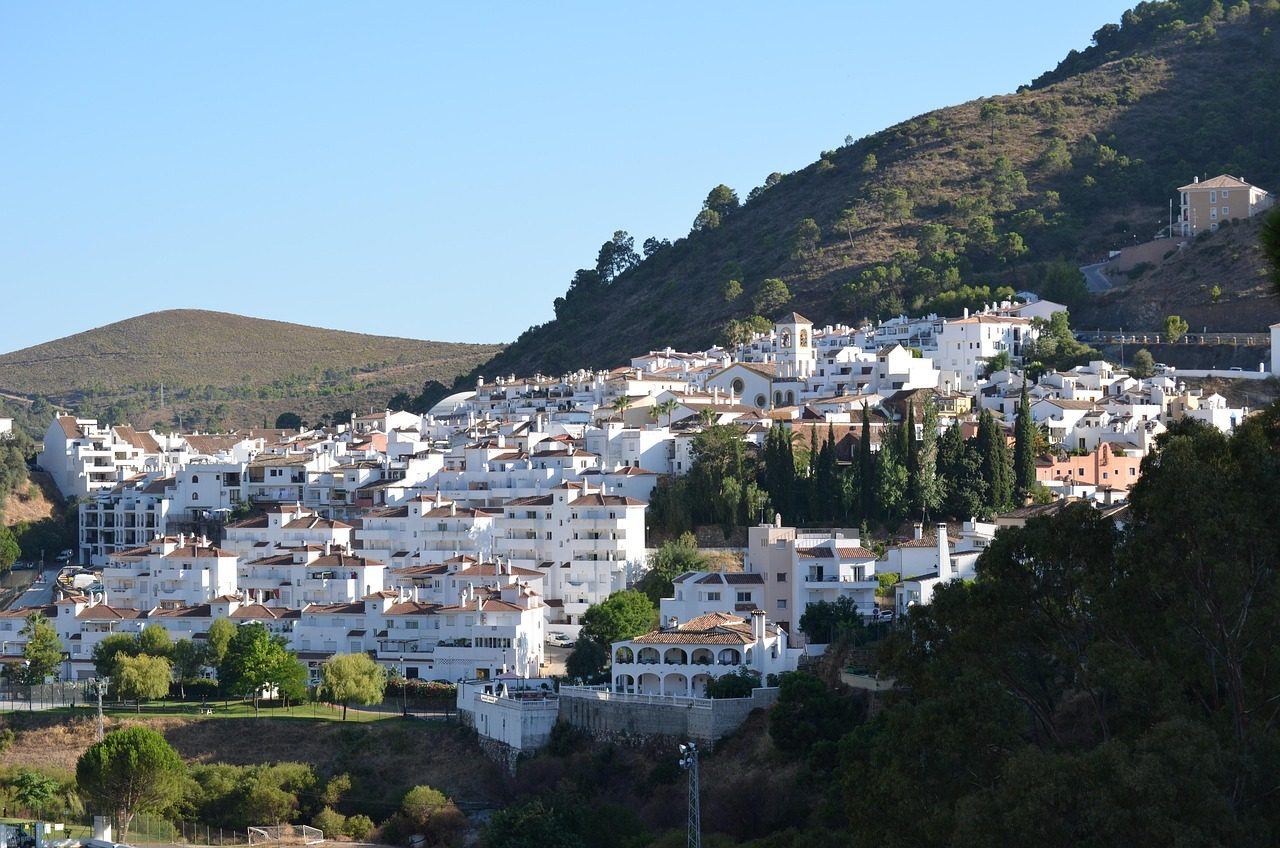
Every August, a single week reorders the rental calendar in Alhaurín el Grande. The fiesta cycle that culminates in Día del Tomate doesn't behave like the rest of summer. It draws a different guest, books on a different timeline, and rewards a different kind of property than the one that wins through July. For the 198 VUTs currently operating in the town, this is the week where pricing logic that worked for a Costa apartment forty minutes away will leave money on the table — or, more often, lose the booking entirely.
We've managed enough Alhaurín el Grande properties through enough fiesta weeks now to see the pattern clearly. This post is about what that pattern looks like, why it exists, and how town-centre owners in particular should be thinking about the week from a pricing and operational standpoint.
What Día del Tomate actually is, and who travels for it
Día del Tomate is the headline day of Alhaurín el Grande's summer fiesta week, traditionally held in the second half of August and built around the town's agricultural heritage in the Guadalhorce valley. The day itself centres on tomato-based stalls, music in the town-centre plazas, and a procession that pulls in residents from across the comarca. But the gravity of the week is wider than the headline day. The whole fiesta cycle — verbenas in the evenings, the religious procession, peñas opening their doors, daytime activities around Plaza Alta and Plaza Baja — produces about six to eight days of continuous demand pressure on accommodation inside the town.
The guest profile is the part most owners misread. This is not international tourism. The week is dominated by three overlapping demand layers. The first is Spanish families with roots in Alhaurín returning to see relatives during the fiesta — diaspora bookings, often from Madrid, Barcelona, Bilbao, and increasingly from northern European cities where Spanish workers have settled. The second is Andalucían short-haul travel from Sevilla, Granada and Córdoba, the classic interior-Andalucían August move toward fiesta towns. The third is families who already holiday in the Guadalhorce area and time their visit to coincide with the fiesta.
What this means in practice: your average lead time compresses, your average length of stay shortens, and your guest expectations shift. A British couple booking for a week in July is not the same buyer as a family of six driving down from Madrid for four nights of fiesta.
Why town-centre properties capture the spike, and rural fincas don't
This is the single most important point for owners to understand, and it's one of the rare cases where the pueblo blanco core out-earns the rural finca economy that otherwise drives much of the Alhaurín rental market.
During fiesta week, distance to the plazas is everything. A guest booking for Día del Tomate is not booking for tranquility, a pool and a view over the citrus groves. They are booking to walk home at three in the morning from the verbena. Properties within five minutes of Plaza Alta or Plaza Baja — the casas tradicionales, town houses, and small apartments in the casco histórico — are the inventory that benefits. Rural finca owners outside the town can charge their usual August rate, but they don't see the fiesta-week premium that town-centre listings can command. Some rural fincas actually see softer demand in this specific week because the families who would otherwise book a finca for August have chosen the in-town option for the fiesta.
We work with owners of both profiles, and the operational implication is straightforward: if you own in or near the casco histórico, this is the week you should be pricing most aggressively. If you own a finca outside the town, fiesta week is not where your annual upside sits, and trying to chase it with steep increases will simply give you an empty calendar.
If you want a clearer read on which side of that line your property falls, our income estimator gives a town-specific starting point that accounts for proximity to the centre.
The pricing window: what we typically see
Without quoting numbers that wouldn't apply to every property, the directional pattern is clear. Town-centre apartments and casas around the plazas see a meaningful step up in nightly rate during fiesta week compared with the rest of August — and August in Alhaurín is already the year's strongest month for many of these properties. Minimum-stay requirements tighten. Three- and four-night bookings dominate, replacing the seven-night cadence that runs through July and early August.
The two pricing mistakes we see most often:
The first is owners who price fiesta week as if it were just another August week. The Spanish family booking from Bilbao knows perfectly well what they are paying for, and the market will absorb a premium. Pricing flat across August leaves obvious money on the table.
The second is owners who recognise the spike but apply it as a blunt instrument across August, pushing the surrounding weeks above what international guests will pay. The result is a calendar with a strong fiesta week sandwiched between two unsold weeks. This is the more expensive mistake, because losing fourteen nights to gain a 10% lift on four is rarely the right trade.
The discipline is to be specific. Identify the fiesta-week dates each year — they shift slightly — and treat them as a distinct rate band, separate from the rest of the August calendar. The week immediately before fiesta should hold standard August pricing. The week immediately after often softens, because Spanish families have used their leave and the rotation toward early-September shoulder season has begun.
How the British and Belgian retiree base interacts with the week
Alhaurín el Grande has one of the larger British and Belgian residential communities of the interior Guadalhorce towns. Many of these residents own outright and don't rent; a smaller subset rent out their properties for parts of the year while travelling. Fiesta week is interesting for this group because it sits at the hottest part of summer — many of these owners are away from Alhaurín in August anyway, often back in northern Europe or in cooler corners of Spain.
What this produces is a particular kind of inventory entering the market during fiesta week: well-finished, owner-occupied properties whose absence from the listings the rest of the year is precisely what makes them appealing when they appear. If you sit in this owner category, fiesta week is one of the cleanest opportunities in the calendar — high demand, short stays that don't tie up your property, guests with strong intent to actually use the town.
The friction is regulatory. A property only goes onto a platform with a valid VUT licence on the Junta de Andalucía's register, and informal one-off arrangements during fiesta week are exactly the kind of activity the current enforcement environment is squeezing out. If you've been thinking about formalising a property for partial-year letting, doing so in time for the August window is sensible. Our VUT licence guidance walks through the steps that apply specifically to Alhaurín el Grande.
Operational reality of fiesta week
Pricing right is one half. Running the property during the week is the other half, and it is operationally heavier than a normal August week.
Turnovers cluster. With three- and four-night stays dominating, the same property might see two or three turnovers in a single week rather than the standard Saturday-to-Saturday cadence. Laundry capacity in the Guadalhorce valley is finite during August in any case, and during fiesta week our cleaning teams are working compressed schedules. Owners managing themselves should be realistic about what same-day turnovers look like when the streets around the plazas are physically closed for the procession and parking inside the casco is essentially impossible.
Noise complaints are the other consideration. A British guest who booked Alhaurín for the rural quiet and didn't realise the fiesta was happening will have a different experience than they expected. We have learned to flag the fiesta dates explicitly in pre-arrival communications for any non-Spanish guest booking that week, with timings of the verbenas and the procession route. It is far better to set expectations honestly than to handle the complaint after the fact. Spanish guests, of course, are booking because of the fiesta and need no such warning.
Check-in logistics during the week are also genuinely harder. The plazas and surrounding streets are pedestrianised for events. Guests arriving by car need clear, written instructions about where to park and how to walk in with luggage. Our office in Arroyo de la Miel handles these arrivals as exceptions rather than the standard automated check-in flow, and any owner-managed property should plan to do the same.
The wider August calendar context
It's worth zooming out. August in Alhaurín el Grande is not a single market. The first ten days behave like a continuation of late July — international family bookings, longer stays, finca dominance. The middle of the month transitions, with the Spanish national holiday on the 15th anchoring a strong domestic-tourism block. Then fiesta week reorders the demand toward the casco and the plazas, with rural inventory holding its own without the same premium. By the final days of August, the calendar begins easing toward the September pattern — golf and shoulder-season bookings, return of international over-55 guests, the start of the inland autumn cycle.
Owners who think of August as one undifferentiated peak month are leaving structure on the table. The four sub-periods inside the month each have their own dynamic, and the property that captures all four well is rare. Most properties capture two or three of them. Knowing which two or three your property is built for — and pricing the others realistically rather than aspirationally — is what produces the strongest annual income outcome.
This is what good pricing actually is. Not a single annual rate sheet, not a peak-shoulder-low three-band approach, but a calendar that recognises that the Alhaurín year contains roughly twelve distinct demand patterns, of which fiesta week is one of the sharpest. Our income pages go into more detail on how the year stacks up for Alhaurín properties of different profiles.
The longer fiesta calendar most owners ignore
Día del Tomate gets most of the attention, but it's not the only fiesta moment that moves rental rates in Alhaurín el Grande. The Semana Santa procession week in spring shifts the casco's pricing in a similar — though smaller — way. Romerías during the year, the Christmas and Three Kings period, and the various saints' days that animate Plaza Alta and Plaza Baja each produce their own micro-spikes. None of them rival August fiesta week in magnitude, but for an owner running a town-centre property year-round, mapping these against your pricing calendar adds up to a real difference over twelve months.
The Sunday market and the regular rhythm of the casco produce a baseline that the fiestas punch above. Understanding that baseline first — what your property earns on a quiet weekend in October when nothing is happening — is the foundation. Everything else is overlay.
What this means if you're buying or recently licensed
If you're looking at properties in Alhaurín el Grande with rental income in mind, the proximity-to-plazas question should be near the top of your checklist. Two properties with identical floor plans and identical finishes can have meaningfully different annual income depending on whether they are inside the five-minute-walk circle around Plaza Alta and Plaza Baja or fifteen minutes out. The fiesta-week premium is one reason; the year-round walkability of the casco is the larger one.
If you already own and have a valid VUT, the question is whether your current operator or your self-managed pricing strategy is actually capturing the fiesta week or just averaging through it. The simplest diagnostic is to look at your nightly rate for the third and fourth weeks of August last year. If they are the same as the first and second weeks of August, you are leaving money on the table. If they are higher but your occupancy was patchy, your premium was probably too aggressive or your minimum-stay rules were wrong for the short-trip Spanish family booking pattern.
Working with us
We manage holiday rentals across the Guadalhorce valley and the Costa del Sol from our office in Arroyo de la Miel, and Alhaurín el Grande sits squarely in our inland portfolio. The fiesta-week pricing work, the pre-arrival communication, the turnover logistics during procession days — these are the kinds of details that don't show up on a property listing but show up clearly in the year-end income statement.
If you own a property in Alhaurín el Grande and want a straightforward conversation about how your calendar handled last August — or how it should handle this one — get in touch through our owner contact form. We'll come back with specifics rather than generalities, and we'll tell you honestly whether your property profile fits the fiesta-week opportunity or whether your annual income story is somewhere else in the calendar entirely.